

Reseförsäkring Irland
Som turist är det viktigt att komma ihåg att man har ett ansvar för sin egen resa och säkerhet. En av de viktigaste åtgärderna man kan ta på egen hand är att se till att man har en giltig reseförsäkring om man skulle bli sjuk eller skada sig.
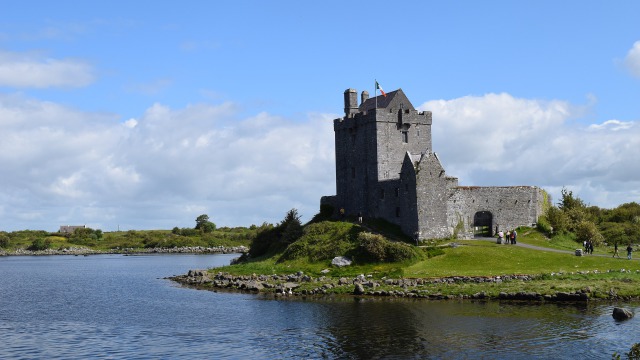
Irland är ett land i Europa som har landsgräns mot Storbritanniens Nordirland. Landet är känt för sitt dramatiska landskap som bjuder in till långa vandringar på både slätter och vid imponerande klippor. Ett par av de kanske mest populära platserna för att njuta av detta är Cliffs of Moher och Skellig Michael. Värt att veta är att många turister tar sig till dessa platser, så om man önskar besöka dem utan att trängas så bör man sikta på tidig morgon.
I Irlands huvudstad Dublin kan du uppleva historisk och vacker arkitektur och ett pulserande nattliv. Här hittar du också shopping och god mat. Vill du ta del av landets dryckeshistoria så finner du här både whiskeyprovningar och kan besöka Guinness bryggeri. Passa också på att se en liveshow med den snabba traditionella irländska folkdansen, som utförs till tonerna av landets medryckande folkmusik.
För dig som vill bege dig utanför huvudstaden så finns det många städer och platser att besöka. Galway, Connemara och Kilkenny är bara några av dessa.
Vädret kan vara varierande i landet, så det kan vara bra att hålla koll på det inför din resa. Särskilt om du planerar en vandringsresa. Glöm inte bort att resa med en passande reseförsäkring när du ska till Irland.
Översikt
Capital: Dublin (pop. 1.270 million)
Population: 5,308,039 (2025 est.)
Religions: Roman Catholic, Protestant, Orthodox, Muslim
Languages: English (the language generally used), Irish (Gaelic or Gaeilge)
Time Zone: UTC 0; daylight saving time: +1hr, begins last Sunday in March, ends last Sunday in October
Driving side: Left
Calling code: +353
Electrical plug(s): Type G
Pengar
The local currency in Ireland is Euros (EUR). As of 6 October 2026 100 EUR is equal to 112.17 USD.
Currency exchange can be done at banks, exchange offices and hotels.
Travellers should be prepared to use either cash or credit or debit card to make payments. Credit cards are widely accepted. ATMs are available in most places.
In restaurants, tip 10-15% of the bill if no service charge is included. Leave 1-2 euros at bars. Taxi drivers do not expect tips and many drivers often round down the bill, especially on longer fares, but you may round up the fare. Tip bellhops 1-2 euros per bag and leave housekeeping 1-2 euros per night.
El
The power supply in Ireland is reliable. Electricity operates on 230V at 50Hz using plug type(s) G.
Pass
Most travellers will need a passport to enter Ireland. The passport must be valid for the duration of the stay and have one blank page.
Nationals of the European Economic Area (EEA) can enter Ireland with a valid ID card.
Nationals of Switzerland can enter Ireland with a valid ID card.
Arrivals from the Common Travel Area (UK, Ireland, Guernsey, Jersey, Isle of Man) can enter without a passport or ID; however, customs and immigration officers may ask travellers to check their photo ID and evidence of their UK immigration permissions.
Visum
Visa-free entry is available for certain travellers who qualify based on nationality and purpose of travel. Travellers may qualify for a visa waiver, however this requires the completion of a security check or travel authorisation prior to departure. All other travellers will need to obtain a visa from the nearest embassy or consulate or apply online (e-visa) prior to travel.
Entry visa requirements vary based on nationality, purpose of travel and other factors. Individual travellers are responsible for ensuring that they comply with all visa requirements, which should be confirmed with authorities at their destination prior to travel.
Visa Free Travel
Visa-free travel to Ireland: Foreign nationals from select countries can enter Ireland visa-free for up to 90 days.
Visa-free travel into the Common Travel Area (CTA): Within the Common Travel Area (CTA), British and Irish citizens can move freely and reside in either jurisdiction and enjoy associated rights and privileges, including the right to work, study and vote in certain elections, as well as to access social welfare benefits and health services. Authorities don't specify the maximum duration of the stay.
Visa Waivers
Short-stay visa waiver programme: Foreign nationals from select countries may be able to enter Ireland without a visa if they fulfill the following requirements:
- they already hold a valid UK short-stay visa
- Their visit to Ireland ends before their permission to stay in the UK ends
- Their passport is issued by one of the countries part of the agreement. The full list is available here
This visa waiver program is not reciprocal.
Visas
British Irish Visa Scheme (BIVS): The British Irish Visa Scheme (BIVS) allows certain foreign nationals to travel to and around the Common Travel Area (CTA) (Ireland and the United Kingdom – excluding the Isle of Man and the Channel Islands) on a single visa for short stays of up to 90 days only.
Short-stay Tourist visa (C): Foreign nationals from select countries need a short-stay tourist visa (C) to enter Ireland for up to 90 days for the following reasons:
- Tourism
- Visit to family or friends
- Study
- Marriage
- Medical treatment
Lokal resor
Overview
Travel across Ireland is generally safe. The country is home to several world-class airports, including Dublin (DUB/EIDW) and Cork (ORK/EICK). Roadways are well-maintained and governed by traffic laws which are widely adhered to. Ireland also possesses reliable commuter rail and bus networks that connect most major cities.
Travel Safety
Air Travel
Dublin Airport (DUB/EIDW) is the main port of entry for travellers and complies with international safety standards. The airport is located in Collinstown about 7 km (4.3 miles) north of Dublin. The airport is the main hub for the national air carrier Aer Lingus, which serves several international destinations. Air travel is overall safe.
There are many transport options for reaching Dublin from the airport. Taxis ranks can be found outside both Terminal 1 and Terminal 2, where all licensed taxis utilize typical taximeters as their charging system. Several bus operators offer routes from the airport to the city, Dublin Express operates from Zone 1 at Terminal 1 and Zone 21 at Terminal 2 and travels directly into Dublin via the Port Tunnel. More information on bus routes is available here.
Other international airports are: Cork Airport (ORK/EICK) located in Cork City, 6.5 km (4.0 miles) south of the city centre and Shannon Airport (SNN/EINN) located in County Clare. Taxis and bus shuttle services are available at both airports.
Airspace
Following the European Union (EU) Commission announcement that all EU airspace will be closed to Russian-owned, Russian-registered and Russian-controlled aircraft, including private planes and for overflights, all flights to and from Russia will be banned until further notice, in line with EU sanctions on Russia over its invasion of Ukraine.
Identification
Most travellers will need a passport to enter Ireland. The passport must be valid for the duration of the stay and have one blank page.
Travellers are allowed entry with passports where gender is indicated as "neutral". The country's overall social acceptance of LGBTQ people is good.
Road Travel
Roads are generally well-maintained and traffic moves on the left. In rural areas, caution is advised due to the narrower and winding nature of the roads. While larger roads are adequately marked with frequent signposts, the same cannot always be said for rural regions. Speed limits are 120 kph (74 mph) on motorways; 100 kph (62 mph) on open roads; 80 kph (49 mph) on certain marked roads outside of urban areas; and 50 kph (31 mph) in towns and residential areas. Enforcement is relatively rigorous. Radar speed traps are located throughout the country and are especially prevalent in populated urban areas. Driving standards vary widely and police have sought to clamp down on bad driving in recent years.
There are a number of toll roads in the Dublin area and beyond. The most significant is the M50 Ring Road between the N3 and N4 interchanges in the capital’s western suburbs; there is no toll plaza and the fee must be paid online, by telephone, or at a network of local shops displaying the Payzone symbol by the day after the journey. Other notable toll roads include the Dublin Port Tunnel linking the M1 motorway with the city’s docklands, and the R131 East Link Bridge that continues the same route across the River Liffey to the south side of the city. Other widely used toll roads include the E1 (M1) route connecting Dublin to Belfast.
Driving under the influence of alcohol is strictly prohibited in Ireland. Irish law prescribes heavy penalties for anyone found guilty of driving with a blood alcohol level higher than 0.8 millilitres of alcohol per millilitre of blood. Individuals who surpass this threshold will encounter a suspension of their driving license, along with fines and the potential for incarceration. Breathalyser tests are commonly conducted by traffic officials.
Rail Travel
Ireland's state-owned firm Iarnród Éireann (or Irish Rail) is responsible for running the country's rail network. Services are safe and efficient, with no serious accidents reported in recent years. The main stations in Dublin (Connolly, Pearse and Heuston) are connected to all of the main urban centres throughout the country. Rail services in Northern Ireland, operated by Northern Ireland Railways (NIR), include a cross-border Dublin-Belfast service in collaboration with the Irish Rail.
More information on ticket purchasing and routes is available on Iarnród Éireann's official website.
In Dublin, an electrically operated train service known as the DART (Dublin Area Rapid Transit) runs along the east coast between Bray and Howth. Another system, the LUAS, operates two lines connecting the southwest of the city, Sandyford and Tallaght, respectively, with the centre, effectively running as a tram in central areas and a light rail system beyond. These systems are fast and efficient ways to travel in the city. They are also very safe, with no serious accidents occurring recently. Petty theft can be a problem, with pickpockets using busy periods as cover.
Public Transport
Infrastructure is of a high standard and public transport is efficient. Petty theft can occur in busy areas, particularly at transport hubs. Confrontations between criminal gangs do occur but pose a low risk to travellers.
Ferries and Boats: A number of ferry services link Ireland to the United Kingdom (UK) and France. The major ports are Cork, Rosslare, Dublin and Dun Laoghaire. Brittany Ferries link Cork with Roscoff in France and Rosslare with Bilbao (Spain). Irish Ferries expanded its services in 2021 between Dublin and Cherbourg (France) owing to increased demand for routes bypassing the UK after Brexit – Stena Line also operates to Cherbourg from Rosslare. Dublin Port has links with Liverpool, Wales and the Isle of Man. All ferries used on international routes out of Ireland are maintained and checked according to EU regulations. Domestic services are used more for sightseeing than transport but are considered safe.
From 28 September, all passengers, including Irish and British citizens, travelling on ferry services between Ireland and the United Kingdom (UK) in both directions must present a valid passport before boarding. From this date, no other forms of identification will be accepted for travel. Irish nationals can use an Irish passport card.
Buses: There is an extensive inter-city bus network in Ireland run by Bus Éireann. Tickets can be booked online, by phone or at any major bus station. Bus Éireann's buses are new and maintenance is done regularly.
Dublin Bus operates the bus service within Dublin. Most routes have buses every 10 minutes at each stop. There is also an extensive night bus service in Dublin, the Nitelink. It offers a cheaper alternative to taxis and is efficient, frequent and safe. On weekend nights, drunken behaviour can turn violent so be vigilant for confrontation.
Taxis: Taxis are widely available in urban centres and all licensed taxis use fare meters. Outside of urban centres, taxis need to be booked in advance. Taxi services in Dublin can be booked through the Taxi Free app. Unlicensed taxis do operate but should be avoided. Make sure to only use taxis with a rooftop ‘TAXI’ sign and a taxi licensing plate. Taxis in Ireland are mostly new vehicles and are well-maintained. Standards for annual government vehicle testing are higher for taxis than ordinary cars. If carrying luggage, consider asking the driver to lock the boot for the journey, as thieves have stolen the luggage of travellers when taxis have stopped at traffic lights.
Vehicle Hire: A wide variety of car rental companies operate in Ireland, both with international brand names and local firms. The majority of cars for hire are recent models and are well-maintained. Most Irish rental cars are stick shift and it can be difficult to find automatic transmission rental cars. Pickpockets have been known to operate on the courtesy buses between Dublin Airport and its car rental compound - travellers should take care of valuables on their person as well as luggage.
Landsinformationen på denna webbplats har översatts med hjälp av maskinöversättning av vår partner. Arbete har utförts för att tillhandahålla en så korrekt översättning som möjligt, dock ska du som läsare ha i åtanke och acceptera att ingen automatisk översättning är perfekt och bör inte heller läsas eller tolkas som så. Landsinformationen är inte avsedd att vara en källa till råd eller handling baserat på det material som presenteras. Ingen garanti antyds eller ges, inga anspråk eller rättsliga åtgärder accepteras.

- {{originalfilename}} x
Närmaste servicekontor
Euro-Center Tjeckien
Kan jag boka försäkring till landet?
Våra försäkringar gäller inte vid resa till område som Utrikesdepartementet i sina rekommendationer avråder från att besöka eller vistas i. Vänligen se listan UD avråder för mer information.