

Reseförsäkring Albanien
Som turist är det viktigt att komma ihåg att man har ett ansvar för sin egen resa och säkerhet. En av de viktigaste åtgärderna man kan ta på egen hand är att se till att man har en giltig reseförsäkring om man skulle bli sjuk eller skada sig.
Fakta om Albanien som resmål:
- Klimat: Klimatet i Albanien är ett typiskt medelhavsklimat vid kusten med varma, torra somrar och milda, regniga vintrar. Inlandsklimatet kan vara mer extremt med kallare vintrar och varmare somrar. Temperaturen varierar mellan 10-30 ºC beroende på säsong och plats.
- Kulturell mångfald: Albaniens rika historia är starkt präglad av dess placering i Europa. I landet finns det gott om historiska sevärdheter att utforska, från forntida ruiner från den grekiska och romerska eran till byggnader med arkitektoniska influenser från det osmanska riket och kommunisttiden.
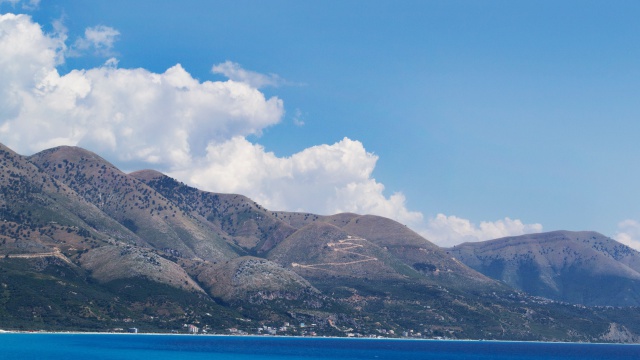
- Stränder och natur: Albanien är känt för sina kristallklara vatten och vackra stränder längs dess Adriatiska och Joniska kust. Inlandet erbjuder dramatiska bergslandskap, vilket gör Albanien till ett utmärkt resmål för både sol-och badälskare och vandrare.
- Mat och dryck: Albaniens matkultur har formats av dess historiska erövrare och är känd för sin användning av färska ingredienser som olivolja, frukter och grönsaker. Typiska rätter inkluderar byrek (en paj fylld med kött eller grönsaker) och qofte (kryddiga köttbullar). Raki, ett lokalt, destillerat, sprit är populärt att dricka till maten.
- Sevärdheter och evenemang: Utforska städer som Berat och Gjirokastër, som båda finns med på UNESCO:s världsarvslista, för att upptäcka deras unika ottomanska arkitektur. Albanien är även värd för en rad kulturella festivaler som hyllar alltifrån film till traditionell folklore.
Albanska fraser att kunna inför resan:
- Hej: Përshëndetje
- Hejdå: Mirupafshim
- Tack: Faleminderit
- Hur mår du?: Si jeni?
- Ja: Po
- Nej: Jo
- Skål: Gëzuar
Översikt
Capital: Tirana (pop. 520,000)
Population: 2,771,508 (2025 est.)
Religions: Muslim, Roman Catholic, Orthodox, other minority religions
Languages: Albanian (official), Greek, other minority languages
Time Zone: UTC+1; +1hr, begins last Sunday in March, ends last Sunday in October
Driving side: Right
Calling code: +355
Electrical plug(s): Type C and Type F
Pengar
The local currency in Albania is Leke (ALL). As of 6 October 2026 100 ALL is equal to 1.22 USD. In addition to the local currency, EUR and USD may be accepted for payment in some places.
Currency exchange can be done at banks, exchange offices and hotels.
Travellers should be prepared to use credit or debit card payments in urban areas and cash in rural areas. Major cities and tourist spots will accept credit/cash, stores outside them will only accept cash in Leks. Credit cards are accepted in upscale and/or tourist areas only. ATMs are only available in urban and/or tourist areas.
Prices in Tirana are significantly higher than in other parts of the country. The LEK is difficult to exchange into another currency outside of Albania, so travellers are advised to exchange their LEK notes before leaving the country.
Rounding up the bill at restaurants is fine, unless the service was outstanding, in which case, a good tip will be much appreciated. Taxi drivers do not expect a tip, but if they help with your luggage and provide you with tourist information, a tip would be appreciated. Tipping the housekeeping staff is not necessary but appreciated.
El
The power supply in Albania is less than reliable. Electricity operates on 230V at 50Hz using plug type(s) C and F. Travellers to Albania should be prepared for rolling blackouts starting in September and lasting until March or April, these can last up to three hours.
Pass
Most travellers will need a passport to enter Albania. The passport must be valid for at least three months after the date of arrival and have two blank pages.
Nationals of Western Balkan countries can enter Albania with a valid ID, via mutual land border crossings.
Nationals of EU countries can enter Albania with a valid ID.
Visum
Visa-free entry is available for certain travellers who qualify based on nationality and purpose of travel. All other travellers will need to obtain a visa from the nearest embassy or consulate or apply online (e-visa) prior to travel.
Entry visa requirements vary based on nationality, purpose of travel and other factors. Individual travellers are responsible for ensuring that they comply with all visa requirements, which should be confirmed with authorities at their destination prior to travel.
Visa Free Travel
Visa-free travel to Albania: Foreign nationals from select countries are allowed to enter Albania visa-free for up to 90 days, with passports or IDs depending on their nationality. Travellers holding valid Schengen visas or residence permits issued by the US, UK and UAE, among other exceptions, may be allowed entry without a visa.
Visa-free travel to Albania (Saudi Arabia and Qatar): Foreign nationals from Saudi Arabia and Qatar are allowed to enter Albania visa-free until 31 December. Authorities do not specify the maximum duration of the stay.
e-Visas
eVisa "C" type: Foreign nationals who wish to enter the Republic of Albania for short stays (up to 90 days within a 180-day period from their date of first entry) need a Visa C type to be allowed entry. This visa type is issued with one, two or multiple entries.
Visas
Schengen visa: Foreign nationals who hold a valid Schengen visa can enter Albania visa-free for 90 days.
Lokal resor
Overview
Public transport around Albania is cheap but can be challenging due to poor road infrastructure and unreliable schedules. Road conditions are poor to fair in most of the country, with particular caution recommended for journeys in the north, where bad weather can make the roads difficult to use. Shared minibuses and taxis are preferable methods of travel to buses or trains. Travel is generally safe, though petty crimes such as pickpocketing can occur. Travellers should be cautious in areas close to the Albania-Kosovo border and stick to well-worn roads as uncleared minefields remain from past conflicts.
Travel Safety
Air Travel
Tirana International Airport Nënë Tereza (TIA/LATI), often referred to as Rinas International Airport, is the main entry point for foreign nationals and the main hub for Albania's national carrier, Air Albania. It is located around 11km (9.6 miles) northwest of Tirana. The airport has good security procedures in place both at the perimeter and in the terminal building. No serious security breaches have taken place in recent years. There are several transportation options to reach downtown Tirana. An express bus service runs hourly from outside the arrivals hall to the city centre. Further information can be found here. Taxis stop outside the terminal building and take around 25-30 minutes to reach the city centre. Kukës Airport (KFZ/LAKU) is located 3.5km (2.2 miles) south of downtown Kukës and primarily serves budget carriers, though Air Albania also operates service. Taxi and minibus services are available.
Vlora International Airport (LVO/LAVL) in Vlorë County has been under construction since 2021 and was expected to start operations in the summer of 2025. The airport is reportedly under investigation for corruption. It's not clear when airport operations will start.
Airspace
Until further notice, the country’s airspace will remain closed to all Russian aircraft, excluding humanitarian and emergency flights, as per recommendations of the European Union (EU) amid the ongoing conflict between Russia and Ukraine.
Borders and Entry
Border closures: Travel through the Greek-Albanian border can be impacted by short-notice closures.
Identification
Most travellers will need a passport to enter Albania. The passport must be valid for at least three months after the date of arrival and have two blank pages.
Travellers with passports where gender is indicated as "neutral" may be denied entry. Contact the nearest embassy, high commission or consulate to confirm if entry is allowed with passports where gender is indicated as "neutral". The country's laws on LGBTQ people are conservative, and overall social acceptance is low. Lesbian, gay, bisexual, transgender and queer travellers in Albania might face legal and social difficulties.
Road Travel
Traffic in Albania moves on the right. Road conditions vary throughout the country; major roads are adequate but secondary roads are often poorly maintained. Foreign nationals are advised to hire a car and local driver, if possible, rather than driving alone. Travelling at night outside the main urban areas is difficult due to poor road conditions and unlit vehicles. In winter, mountain roads become snowy and icy, and special equipment, such as winter tyres, are essential. Following the melting of winter snow, spring in Albania can lead to road flooding, especially in the north. In summer, the high temperatures often melt tarmac roads. Travellers are advised to use a four-wheel-drive vehicle if travelling outside of urban areas.
Local drivers can be aggressive and reckless. Drivers should be vigilant for pedestrians walking along roadsides, including on major highways. Road accident rates and fatalities are among the highest in Europe. Minor traffic disputes can quickly escalate; avoid reacting to provocative behaviour by other drivers.
Speed limits are 40kph (25 mph) in built-up areas, 80kph (49 mph) outside built-up areas, 90kph (56 mph) on expressways and 110kph (68 mph) on motorways. If you are caught speeding, penalties range from heavy fines to licence confiscation on-the-spot.
Rail Travel
The Albanian train system is rudimentary and slow, although cheap. There are no international train connections to Albania, and the country has a very small rail network. Overall, train travel is not advised, as many carriages are dilapidated and petty crime is frequent.
As of April 2022, the only service operating is between Shkodër and Lac, part of the original Shkodër–Vorë railway. Construction work to upgrade the Durrës–Tirana line and link it with Tirana International Airport started in 2021. As of December 2023, Albania state-owned Railways (HSH) selected an Austrian-led consortium to conduct the feasibility study for the construction of a new line from Albania to the Kosovan capital Pristina.
Public Transport
Ferries and Boats: Albania has sea connections with Italy and Greece, and one domestic ferry route that crosses Lake Koman connects Koman and Fierze. Albania's main seaports are Durres, Vlorë, Sarande and Shengjin. Albanian ports can be chaotic. Make sure you have all your luggage with you at all times and a destination or travel plan at hand. Petty thieves often take advantage of disorientated travellers to pickpocket or steal bags.
Buses: Albanian bus companies offer intercity connections and some services within Tirana. Travel by bus is cheap; however, most travel only during the day and can be unreliable, crowded and uncomfortable. Petty theft is common.
Minibuses: Many Albanians travelling both within and between towns use private minibuses known as "kombis" or "furgons". Generally, furgons cost a little more and go faster. These private minibuses run an erratic schedule with no clear timetable; they leave when they are full. However, kombis are usually a safe way to travel and can be a good way to meet locals. Do not enter an empty minibus, as you will most likely be waiting a long time until more passengers arrive. Pay your fee to the driver; it is not uncommon for foreign nationals to be asked to pay a higher price than locals. During the summer, mini-buses travelling from Tirana to coastal resorts get extremely crowded, so arriving early in the morning is recommended to ensure a seat.
Taxis: Taxis in Albania are cheap and can be booked in advance or hailed from the street. In Tirana and other major cities, they are the best way to get around town quickly. Always use yellow taxis, usually parked at street corners in specific areas, since unlicensed taxis can overcharge by considerable amounts. Taxi drivers are keen to gain business, so they may offer their services for longer journeys. Most taxis are metered and have a flat rate based on distances, but prices for intercity taxi journeys can be negotiated. Travellers are advised to agree on the price with the driver before setting off. Taxi drivers in Tirana may know a little English or another European language. While Uber is not available, other local ride-hailing apps function similarly.
Vehicle Hire: Cars for hire are generally recent models and are well maintained, but vehicles from smaller firms may be less reliable. Travellers are advised to check with the rental agency in advance if they plan to travel abroad due to border crossing restrictions.
Landsinformationen på denna webbplats har översatts med hjälp av maskinöversättning av vår partner. Arbete har utförts för att tillhandahålla en så korrekt översättning som möjligt, dock ska du som läsare ha i åtanke och acceptera att ingen automatisk översättning är perfekt och bör inte heller läsas eller tolkas som så. Landsinformationen är inte avsedd att vara en källa till råd eller handling baserat på det material som presenteras. Ingen garanti antyds eller ges, inga anspråk eller rättsliga åtgärder accepteras.

- {{originalfilename}} x
Närmaste servicekontor
Euro-Center Tjeckien
Kan jag boka försäkring till landet?
Våra försäkringar gäller inte vid resa till område som Utrikesdepartementet i sina rekommendationer avråder från att besöka eller vistas i. Vänligen se listan UD avråder för mer information.