
Reseförsäkring Förenade Arabemiraten
Som turist är det viktigt att komma ihåg att man har ett ansvar för sin egen resa och säkerhet. En av de viktigaste åtgärderna man kan ta på egen hand är att se till att man har en giltig reseförsäkring om man skulle bli sjuk eller skada sig.
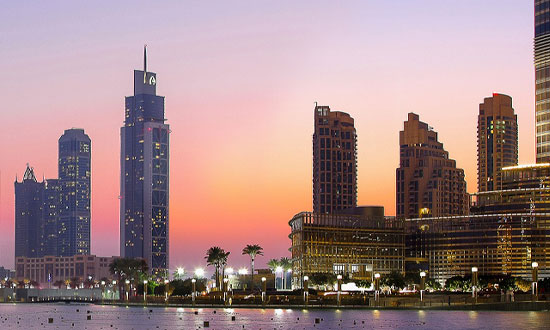
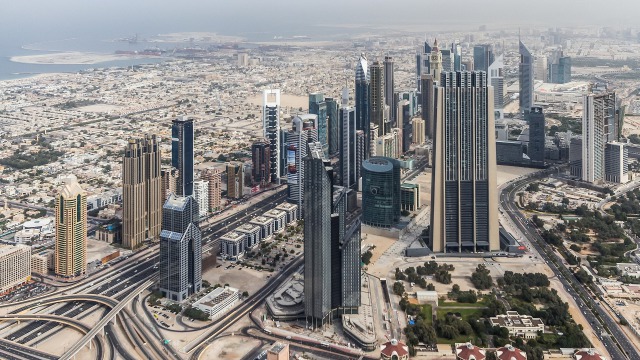
Förenade Arabemiratens huvudstad, Abu Dhabi, är känt för sina arkitektoniskt imponerande moskéer, storslagna shoppingcenter och temaparker. Men det är också en bra stad att utgå från för den som vill ge sig iväg på ökensafari och testa på att exempelvis köra fyrhjuling bland de stora sanddynorna. Dubai, som är kanske den mest besökta delen av landet för oss svenskar, så återfinns bland annat världens högsta byggnad, Burj Khalifa. Också här väntar magnifik shopping, varma stränder och behagliga badtemperaturer.
Förenade Arabemiraten är känd som ett resmål för den som uppskattar lyx och flärd. Här kan man njuta av högklassig mat, se storslagna byggnader och konstgjorda öar som skapats för att imponera även den mest kräsna av besökare.
Vi rekommenderar att du läser på om lokala lagar och seder i landet innan du reser dit. Och oavsett om du reser till Dubai, Abu Dhabi eller någon av de andra emiraten, är det bra att ha en reseförsäkring med ett skydd som möter dina behov.
Översikt
Capital: Abu Dhabi (pop. 1.567 million)
Population: 11,346,000 (2025 est.)
Other Urban Areas: Dubai (pop. 3.008 million); Sharjah (pop. 1.831 million)
Religions: Muslim (official) (Sunni, Shia, other), Christian, Hindu, Buddhist, agnostic, other
Languages: Arabic, English, Hindi, Malayam, Urdu, Pashto, Tagalog, Persian
Time Zone: UTC+4
Driving side: Right
Calling code: +971
Electrical plug(s): Type G and Type M
Pengar
The local currency in United Arab Emirates is Emirati dirhams (AED). As of 6 October 2026 100 AED is equal to 27.22 USD.
Currency exchange can be done at airports, exchange offices and hotels.
Travellers should be prepared to use either cash or credit or debit card to make payments. Credit cards are widely accepted. ATMs are available in most places.
Banking hours are from Sat-Wed 0800-1300 and Thurs 0800-1200.
Even if there is a service charge, tip the waiter 10-15% of the total bill. Many Dubai residents choose to tip taxi and hail-riding services 5-10 dirhams or to round up the fare.
El
The power supply in United Arab Emirates is reliable. Electricity operates on 230V at 50Hz using plug type(s) G and M.
Pass
Most travellers will need a passport to enter The United Arab Emirates (UAE). The passport must be valid for at least six months after the date of arrival and have one blank page.
Nationals of GCC (Gulf Cooperation Council) countries can enter the United Arab Emirates with a valid smart ID.
Visum
Visa-free entry is available for certain travellers who qualify based on nationality and purpose of travel. A visa on arrival scheme is in place for select travellers, but often depends on nationality, purpose of travel and port of entry. All other travellers will need to obtain a visa from the nearest embassy or consulate or apply online (e-visa) prior to travel.
Entry visa requirements vary based on nationality, purpose of travel and other factors. Individual travellers are responsible for ensuring that they comply with all visa requirements, which should be confirmed with authorities at their destination prior to travel.
Visa Free Travel
Visa-free entry to United Arab Emirates (30 days): Nationals of selected countries may enter the United Arab Emirates visa-free for a 30-day stay.
Visa-free entry to the United Arab Emirates (90 days): Nationals of China may enter the United Arab Emirates visa-free for up to 90 days.
Visa-free travel to UAE for GCC citizens: GCC nationals can enter the UAE visa-free.
e-Visas
Dubai/Oman joint-entry visa: Foreign nationals from select countries with a valid visa for Dubai can enter Oman without an additional visa for three weeks. This is a single-entry visa. Authorities don't specify which nationals are eligible.
Visas on Arrival
Visa on Arrival for Indian nationals: Indian nationals who hold a valid residence permits from Australia, Canada, Japan, New Zealand, South Korea, and Singapore or a valid visa, residence permit, or Green Card from the United States (US), the European Union (EU), or the United Kingdom (UK), can apply for a 14 days visa on arrival to enter the United Arab Emirates (UAE).
Visa upon arrival (30 days): Foreign nationals from select countries can apply for a visa upon arrival (VoA) valid for up to 30 days.
Visa on Arrival (14 or 60 days): Nationals of Indonesia, Vietnam, Thailand, the Philippines, Kenya, and South Africa, who have a valid residence permit from the United States, European Union countries, the United Kingdom, Singapore, Japan, South Korea, Australia, New Zealand or Canada, will be eligible for a visa on arrival for 14 or 60 days.
Visa upon arrival (90 days): Foreign nationals from select countries can apply for a visa upon arrival (VoA) valid for up to 90 days.
Visa upon arrival (180 days): Mexican nationals can apply for a visa upon arrival. The visa is a multiple-entry visa valid for stays of up to 180 days.
Visas
Entry visa: Foreign nationals from select countries must apply for a visa prior to departure for the United Arab Emirates. Travellers may apply for a long-term visa (valid for a 60-day stay) or a short-term visa (valid for a 30-day stay); applicants may opt for single entry or multiple entries. This visa can also be used for business purposes.
Lokal resor
Overview
Although road conditions are of good quality across the country, speeding and reckless driving cause the UAE to have one of the highest rates of road deaths in the world. While public transport services are limited outside Dubai and Abu Dhabi, they are reliable and safe. Taxis are safer and more readily available.
Travel Safety
Air Travel
Due to the United States (US)/Israel-Iran conflict, some airlines have suspended flights to the country.
Israeli officials prohibited El Al, Arkia and IsraAir flights from landing at Dubai International Airport (DXB/OMDB) until the end of October amid continued regional conflict.
The UAE's main international airports are located in Dubai and Abu Dhabi, though a growing number of carriers have begun servicing Sharjah as well. Smaller international airports are Ras al-Khaimah (RKT/OMRK), Fujairah (FJR/OMFJ) and Al Ain (AAN/OMAL).
Dubai International Airport (DXB/OMDB), situated approximately four kilometres (2.5 miles) southeast of Dubai city centre, serves as the principal hub for Dubai's flagship Emirates airline and a sub-hub for a number of large carriers. Dubai International Airport is one of the focal points of a uniquely severe zero-tolerance national drug strategy and has seen a build-up of security in recent years. Dubai authorities have been known to stop tourists on layovers at the airport and are now using extremely sensitive electronic detection equipment and testing bodily fluids to screen for traces of illegal substances. From an unspecified time in the 2030s or 2040s, authorities plan to shut Dubai International Airport, moving flight operations to Al Maktoum International Airport (DWC/OMDW).
Efficient and safe public transport alternatives servicing the city include the Dubai Metro, Dubai International Airport Buses and fixed-fare airport taxis. Dubai Metro trains run at 10-minute intervals between stations located across the city. Bus stations are located opposite both terminals and serve the most popular corridors in the city centre. Airport buses take around 20 minutes to the city centre. Airport taxis booked at the arrivals hall are a more expensive option.
Abu Dhabi International Airport (AUH/OMAA), situated approximately 30 km (19 miles) east of Abu Dhabi city centre, is an important hub for Etihad Airways. Though airport security lacks the same emphasis on contraband detection found in other Emirati hubs, baggage handling systems are equipped with online security screening, and security surveillance is designed to respond to suspicious behaviour. The airport has a biometric face scan system.
Several public bus routes arrive outside the arrivals halls of Terminals 1 and 2 and offer efficient and reliable service between the airport and the city centre at 40-60 minute intervals. Taxis also offer safe and reliable intra- and inter-city service from the arrivals halls of Terminals 1 and 2.
Sharjah International Airport (SHJ/OMSJ), situated approximately 10km (6.2 miles) from Sharjah city centre and about 15km (nine miles) from Dubai, has begun taking on an increasing number of international flights. The conservative character of Sharjah is reflected in the restriction on the import and export of alcohol, though only for Muslim passengers.
Borders and Entry
Entry ban: Emirates officials indicated that Iranian nationals are no longer allowed to enter and transit the country. FlyDubai officials reportedly also indicated that authorities banned all Iranian passport holders from entering or transiting through Dubai International Airport (DXB/OMDB), including those holding valid residency, visit and tourist visas.
Health-related entry restrictions: Effective 6 June, new visa issuance is suspended for nationals of the Democratic Republic of Congo (DRC) and South Sudan. Entry is restricted for travellers arriving from the listed countries, including if travelling via transit through other countries. Entry will only be permitted for travellers who spent over 21 days outside the listed countries.
Identification
Most travellers will need a passport to enter The United Arab Emirates (UAE). The passport must be valid for at least six months after the date of arrival and have one blank page.
Travellers with passports where gender is indicated as "neutral" are not allowed entry. The country's laws on LGBTQ people are conservative, and overall social acceptance is low. Lesbian, gay, bisexual, transgender and queer travellers in The United Arab Emirates (UAE) might face legal and social difficulties.
Exit
The United Arab Emirates (UAE) Ministry of Foreign Affairs announced that a travel ban prohibiting Emirati citizens from travelling to Iran and Iraq is now in effect due to the regional security situation amid the United States (US)/Israel-Iran conflict.
Emirati citizens who intend to travel to Lebanon are required to register on the Twajudi platform before departure.
Road Travel
Traffic in the UAE moves on the right. Roads in the urban areas, particularly in Dubai and Abu Dhabi, are in excellent condition, but motorists often drive recklessly. The UAE has one of the world's highest accident rates and driving death rates. Remain alert for unexpected moves from other vehicles on the road.
An International Driver's Permit (IDP) is required along with your own driving licence. Expatriates living in the UAE need to get a local licence. Authorities operate a zero-tolerance policy towards drink-driving. Failure to heed this warning could result in expulsion or incarceration. Emirati criminal law prohibits obscene language and gestures in public. Each year, foreign nationals are fined and/or detained for up to 30 days on allegations of having disrespected other motorists. Always show respect and composure while driving in the UAE. Driving while on a mobile phone is illegal.
Desert driving should only be done with a 4x4 vehicle in excellent condition. Do not venture into the desert alone: desert driving expeditions should always involve more than one vehicle. Take plenty of water, carry an up-to-date map or GPS, appropriate clothing, a telephone and emergency kit and plan their route prior to departure. Always make sure someone in the city knows when you plan to go and when you intend to return.
Rail Travel
The country does not have inter-city railway services for passengers. Currently, inter-city railways are used for freight trains.
On 30 June, Etihad Rail launched the country's first national passenger rail network. At this stage, there are only two stations open, namely Fujairah Station, Abu Dhabi's Mohammed Bin Zayed City Station, Dubai and Sharjah's Al Dhaid. Tickets can be purchased here. When all stages are complete, Etihad Rail plans to connect other cities, namely Dubai, Sharjah, Sila, Al Dhannah, Mirfa, Madinat Zayed, Mezaira’a, Al Faya and Al Dhaid. Officials also plan to construct a high-speed railway between Dubai and Abu Dhabi.
Public Transport
Ferries and Boats: In Dubai, small ferries (abra) carry passengers across the Creek that separates the districts of Deira and Bur Dubai. The Creek is rarely rough enough to raise fears of falling overboard even though there are no guard rails and the boats may fill up beyond official capacity. Men usually avoid sitting next to a woman on a full-size abra. A ferry service also operates to ports in Iran from Sharjah, though timetables can be erratic.
Buses: Bus companies across the UAE vary in maintenance standards. Marked vehicles in the major cities will operate on a higher safety standard. Protect bags and valuables from the risk of petty theft at bus stations. Dubai Inter Emirate Bus Service connects Dubai with the other emirates from multiple stations throughout the city. Bus connections between Abu Dhabi and Dubai can be found at Ibn Battuta Bus Station in Dubai or Al Ghubaiba Bus Station in Bur Dubai and the Main Bus Station in Abu Dhabi. Long-haul public buses also service smaller towns including Sha’am, Jazeerah-al-Hamra and Rams.
The Dubai municipality operates a network with more than 60 different bus routes that reach most points in the city. The bus system is almost exclusively used by the large population of migrant workers. Unaccompanied women may feel uncomfortable travelling alone in the predominantly male crowds. Men should not take seats in the three front rows, as these are reserved for women.
Metro: The Dubai Metro is modern and safe. It is monitored by more than 3,000 CCTV cameras and a dedicated police force. Most Dubai metros have a marked women’s carriage. Service runs from 05:00-00:00 local time Monday-Thursday and Saturdays, 05:00-01:00 on Fridays and 08:00-00:00 on Sundays.
Taxis: Most foreign nationals use taxis exclusively. In Dubai and Abu Dhabi taxis can be hailed in the street or found at taxi stands off major arteries. Rates are usually set at a fixed price for travel within the city, with separate rates for transport between cities. In the smaller centres such as Ajman, Umm al-Qaiwain, Ras al-Khaimah, Fujairah and Sharjah public transportation is often nonexistent and taxis must be used. Non-metered taxis are often available and allow room for negotiation but haggling can be difficult. Ask in advance at your hotel or a local guide about what to pay as a fair price and pay when you exit. Hotel taxis generally charge much more than taxis hailed in the street. Taxis are generally safe but visitors, particularly women, should avoid sitting in the front seat and should be sensitive that "small talk" can be misinterpreted as over-friendliness or even a form of propositioning by some taxi drivers. It is also available to book a taxi via various ride-hailing apps, namely Uber and Careem.
Taxis are allowed to pick up passengers only in the emirate in which they are licensed so it is possible to take a taxi from one emirate to another, but the same driver will not be able to drive you back.
Vehicle Hire: Rental cars are a common way for visitors to move about the country. Rental vehicles are predominantly recent models and are well maintained.
Landsinformationen på denna webbplats har översatts med hjälp av maskinöversättning av vår partner. Arbete har utförts för att tillhandahålla en så korrekt översättning som möjligt, dock ska du som läsare ha i åtanke och acceptera att ingen automatisk översättning är perfekt och bör inte heller läsas eller tolkas som så. Landsinformationen är inte avsedd att vara en källa till råd eller handling baserat på det material som presenteras. Ingen garanti antyds eller ges, inga anspråk eller rättsliga åtgärder accepteras.

- {{originalfilename}} x
Kan jag boka försäkring till landet?
Våra försäkringar gäller inte vid resa till område som Utrikesdepartementet i sina rekommendationer avråder från att besöka eller vistas i. Vänligen se listan UD avråder för mer information.