

Reseförsäkring Malta
Som turist är det viktigt att komma ihåg att man har ett ansvar för sin egen resa och säkerhet. En av de viktigaste åtgärderna man kan ta på egen hand är att se till att man har en giltig reseförsäkring om man skulle bli sjuk eller skada sig.
Landet består av sju öar, där tre av dessa är bebodda: Comino, Gozo och Malta. Kring dessa öar hittar vi azurblått vatten med perfekta förhållanden för såväl dykning som snorkling. Om du önskar en mer aktiv semester så är vintern utmärkt för vandring, och bjuder då på fantastiska vyer. Också vindsurfing är en populär aktivitet kring dessa öar, och ett besök i Kalypsogrottan är ett måste för dig som är intresserad av grekisk mytologi.
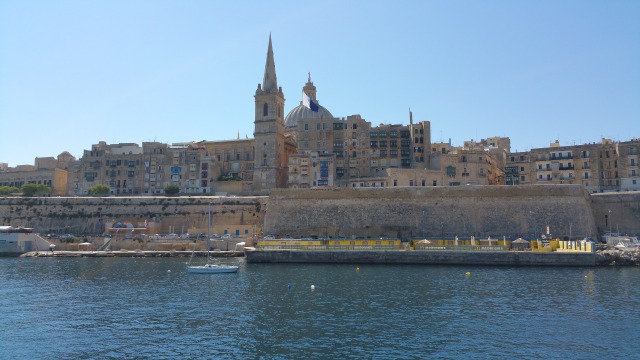
Maltas huvudstad Valletta, som du finner på ön Gozo, är med på UNESCO:s världsarvslista genom historiska landmärken som St John's Co-Cathedral, Grand Master's Palace och Fort Saint Elmo. Passa på att ta en guidad tur i staden för att lära dig mer om landets historia, och glöm inte bort att njuta av färsk fisk och skaldjur i någon av stadens restauranger.
När du planerar din resa till Malta är det bra att passa på att också se över skyddet i din reseförsäkring, så att det omfattar de aktiviteter du planerar utföra och de behov just du har.
Översikt
Capital: Valletta (pop. 213,000)
Population: 545,405 (2025 est.)
Religions: Roman Catholic more than 90%
Languages: Maltese, English
Time Zone: UTC+1; daylight saving time: +1hr, begins last Sunday in March; ends last Sunday in October
Driving side: Left
Calling code: +356
Electrical plug(s): Type G
Pengar
The local currency in Malta is Euros (EUR). As of 6 October 2026 100 EUR is equal to 112.17 USD.
Currency exchange can be done at airports, banks, exchange offices, hotels and large shops.
Travellers should be prepared to use credit or debit card payments in urban areas and cash in rural areas. Credit cards are accepted in some establishments but cash remains the preferred payment method. Credit cards are accepted in upscale and/or tourist areas only. ATMs are only available in urban and/or tourist areas.
Banks are generally open from 0830-1230 from Monday to Friday and 0830-1130 on Saturdays. Banking hours may differ between summer and winter.
It is customary to tip between 5-10% at restaurants. However, if a service charge is already included, then a tip is not necessary. Tip porters/bellhops 1-2 euros per bag. A small tip for housekeeping is also greatly appreciated and should be about 2-3 euros per day.
El
The power supply in Malta is reliable. Electricity operates on 230V at 50Hz using plug type(s) G.
Pass
Most travellers will need a passport to enter Malta. The passport must be valid for at least three months after the date of departure, have been issued within the last ten years and have two blank pages.
Nationals of the European Union (EU) can enter the Schengen area with a valid ID.
Visum
Visa-free entry is available for certain travellers who qualify based on nationality and purpose of travel. All other travellers will need to obtain a visa from the nearest embassy or consulate or apply online (e-visa) prior to travel.
Entry visa requirements vary based on nationality, purpose of travel and other factors. Individual travellers are responsible for ensuring that they comply with all visa requirements, which should be confirmed with authorities at their destination prior to travel.
Visa Free Travel
Visa-free travel within the Schengen area: Citizens of any country that is part of the Schengen agreement can freely enter and reside in any Schengen country without a visa. Some foreign nationals from non-Schengen countries are also allowed entry without a visa, including citizens of the United Kingdom (UK), United States of America (USA), and Canada among others who can enter visa-free for short stays of up to 90 days within a 180-day period.
Visas
Schengen Visa: Foreign nationals coming from select countries need a Schengen visa to enter Malta for up to 90 days (three months) during each 180 days period, regardless of the purpose of their stay.
Short-stay Schengen Visa (C type): Foreign nationals coming from select countries need a Schengen visa to be allowed entry to any country in the Schengen area.
Travellers are permitted to stay in any of the Schengen zone countries on a single, double or multiple-entry visa, for up to 90 days (three months) during each 180 days period, regardless of the purpose of stay.
Effective 7 November 2025, multi-entry visas are not being issued for Russian citizens.
Visas issued for Schengen countries apply to the entire Schengen area. With a Schengen visa, a third-country national can enter a Schengen country and then travel freely throughout the entire Schengen area, since border checks of persons travelling across the national borders of the Schengen countries have been removed.
Application and processing times may vary depending on the single applicant and the embassy.
Lokal resor
Overview
Malta International Airport (MLA/LMML) is the country’s sole commercial airport and the principal point of entry for travellers. Air travel to and from Malta is safe and well-regulated. Most main roads are modern and well-maintained, though many secondary and rural roads remain narrow and winding. Local driving standards are often aggressive, and road-traffic accidents are frequent. Public transport, operated by Malta Public Transport, is extensive and generally reliable, although delays can still occur during peak hours.
Travel Safety
Air Travel
All international flights arrive at Malta International Airport (MLA/LMML) in Luqa. The national airline is KM Malta Airlines, which operates flights to over 30 destinations in Europe and North Africa. The airline has a clean safety record and good customer service.
Security at the airport is good, conforming to all European Union (EU) regulations. A unit of the Maltese army is stationed at the airport to provide extra security. There have been no serious security breaches at the airport in recent years.
To get to the capital Valletta from the airport, there are several transport options. Public buses leave from outside the main entrance to the city. Although the buses are modern, space for luggage is usually tight at busy times. Many hotels offer an airport transfer service, which is usually free of charge for guests. Check with your hotel before you arrive. Taxis are available 24 hours a day from outside the terminal building, all official taxis operate on a fixed price basis, and tickets must be bought in advance from a booth in the arrivals hall. Unlicensed taxi drivers may approach you in the arrivals hall but you should never accept their offer as they nearly always overcharge. The airport is a 20 to 30-minute drive from both Valletta and Sliema.
Internal flights are limited to helicopter flights between Malta International Airport and Xewkija Helipad on the island of Gozo.
Airspace
Following the European Union (EU) Commission announcement that all EU airspace will be closed to Russian-owned, Russian-registered and Russian-controlled aircraft, including private planes and for overflights, all flights to and from Russia will be banned until further notice, in line with EU sanctions on Russia over its invasion of Ukraine.
Identification
Most travellers will need a passport to enter Malta. The passport must be valid for at least three months after the date of departure, have been issued within the last ten years and have two blank pages.
Travellers are allowed entry with passports where gender is indicated as "neutral". The country's overall social acceptance of LGBTQ people is good.
Road Travel
Traffic moves on the left in Malta. Road accidents are common on many roads around Malta. The most dangerous routes include the Saint Andrew's-Saint Paul's Bay coastal road, Paceville-Msida bypass, Marsa-Valletta road and Luqa-Valletta road, particularly near Msida roundabout. In the case of an accident, you should contact the traffic police and await their arrival on the scene without moving the vehicles involved. The driving habits of local drivers can be erratic and unpredictable. Some pedestrian walkways are in poor condition, so there is further danger from pedestrians walking on the road. Many vehicles on Malta's roads are not in roadworthy condition, which can cause accidents.
In recent years, Malta has made several improvements to its road network. Most major roads connecting the main urban areas have good-quality surfacing and are clearly signposted. These include the main road leading from Malta International Airport to Valletta and St Julian's. However, drivers will typically encounter winding, pot-holed roads in rural areas, as in the west of the island surrounding Siggiewi and in most of the countryside of Gozo. Approach these roads with caution, and note that it is common to use your horn to signal your presence when approaching a blind bend. From September to December, heavy rains lead to flash flooding on some rural roads, making them impassable.
The drink driving limit is 0.8 milligrams of alcohol per millilitre of blood. Police enforce this limit, and those caught over face large fines or licence confiscation. Speed limits are 50kph (31mph) in urban areas and 80kph (49mph) in rural areas. Other speed limits may be in place based on road conditions, so pay attention to signage. Speed cameras have recently been installed on some busy routes, and traffic police also use radar guns.
Public Transport
Ferries and Boats: International ferries link Malta to Sicily in Italy, but can be more expensive than flying. The advantage is that they take only 90 minutes. Cargo ships occasionally take passengers to and from the port of Sa Maison, near Valletta. Regular domestic ferries link Cirkewwa on the mainland with Mgarr on Gozo, carrying vehicles as well as passengers. They take 20 minutes. The service uses modern and safe ferries, but standards may not be as high as in Western Europe. Some departures may be cancelled in the case of inclement weather. Numerous smaller-scale operations carry passengers to other islands and around the mainland. Although these can be considered safe, smaller vessels are inherently more dangerous than large ferries.
Buses: Malta has a good bus network that allows efficient and safe transport called Tallinja. The buses are equipped with air conditioning and free WiFi, and many routes run frequently across the island and Gozo. Payments can be made by cash or contactless once on the bus. Further information on the system routes, payments, and schedules can be found on both the official website and the app.
Taxis: Taxis are widely available in Malta. They are a fast, though relatively expensive, means of transport between the main towns. The company Malta Taxi is the only official taxi company licensed by Transport Malta and it has an available app for booking options. Ride-sharing options like Bolt are also available.
Unlicensed taxi drivers work from public transport hubs and other busy areas and should always be avoided due to their propensity to overcharge. However, even licensed Maltese taxi drivers are notorious for overcharging foreign nationals so travellers are recommended to always agree on a price before entering the taxi. Taxi drivers frequently break the speed limits by significant margins. If you feel it is dangerous in the circumstances you should ask the driver politely to slow down. For late night travel home from the popular nightlife area in Paceville, local taxi firms offer a cheaper mini-bus or shared taxi service with fixed rates.
Vehicle Hire: Travelling by car is usually much faster than using the bus network. There are a number of local and international car hire firms operating in Malta. Some small local car rental companies are known for renting out faulty vehicles without carrying out proper safety tests. Only hire cars from reputable companies that have been recommended. Rental vehicles are easily identifiable as all must include the letter 'K' in the registration number. This can make them targets for thieves, who smash windows in the expectation that foreign nationals have left valuables in the vehicle. When leaving the car you should ensure that no valuables are left inside the vehicle. Within the walls of the fortified cities of Valletta and Mdina, traffic is restricted to special permit holders only. However, these areas have car parks conveniently located outside the city gates. Roads in other town centres are generally narrow and congested.
Landsinformationen på denna webbplats har översatts med hjälp av maskinöversättning av vår partner. Arbete har utförts för att tillhandahålla en så korrekt översättning som möjligt, dock ska du som läsare ha i åtanke och acceptera att ingen automatisk översättning är perfekt och bör inte heller läsas eller tolkas som så. Landsinformationen är inte avsedd att vara en källa till råd eller handling baserat på det material som presenteras. Ingen garanti antyds eller ges, inga anspråk eller rättsliga åtgärder accepteras.

- {{originalfilename}} x
Närmaste servicekontor
Euro-Center Larnaca
Kan jag boka försäkring till landet?
Våra försäkringar gäller inte vid resa till område som Utrikesdepartementet i sina rekommendationer avråder från att besöka eller vistas i. Vänligen se listan UD avråder för mer information.