

Reseförsäkring Serbien
Som turist är det viktigt att komma ihåg att man har ett ansvar för sin egen resa och säkerhet. En av de viktigaste åtgärderna man kan ta på egen hand är att se till att man har en giltig reseförsäkring om man skulle bli sjuk eller skada sig.
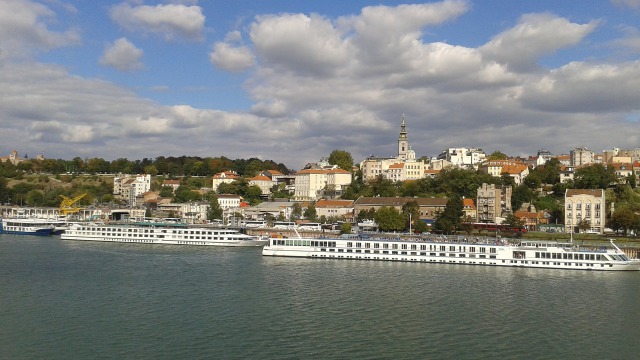
Serbiens huvudstad Belgrad är en av Europas äldsta huvudstäder. Det är en mysig stad där du kan upptäcka allt från prisvärd mat och dryck i äldre stadsdelar, till imponerande arkitektur i form av exempelvis världens största ortodoxa kyrka – Sankt Savas tempel. Staden är full av liv, och man kan ofta höra livemusik och se lokalbefolkningen dansa tillsammans. Konst, mat, nattklubbar och mycket annat väntar i området Skadarlija, och här kan du ta del av den lokala kulturen på ett genuint och roligt sätt.
Men Serbien har också flera naturupplevelser att erbjuda, där vandring är en aktivitet att rekommendera. Exempel på detta är Devil’s Town, eller Djavolja varoš som det heter på Serbiska. En plats som utgörs av två raviner och som återfinns på UNESCO:s världsarvslista. Hit kommer människor för att ta in och förundras över den dramatiska naturen. Åker man till Zlatibor hittar man andra upplevelser i form av Gostilje vattenfall och grottorna Stopica. Här kan du dessutom passa på att åka skidor. Andra orter för skidåkning är Stara Planina och Kopaonik.
För dig som ska åka till Serbien så rekommenderar vi att du skaffar en reseförsäkring som möter dina behov. Särskilt om du planerar att åka skidor eller ska utföra någon annan riskfylld aktivitet.
Översikt
Capital: Belgrade (pop. 1.408 million)
Population: 6,689,039 (2025 est.)
Religions: Orthodox 84.6%, Catholic 5%, Muslim 3.1%, Protestant 1%, atheist 1.1%, other 0.8% (includes agnostics, other Christians, Eastern, Jewish)
Languages: Serbian, Hungarian, Bosnian, Romani
Time Zone: UTC+1; daylight saving time: +1hr, begins last Sunday in March; ends last Sunday in October
Driving side: Right
Calling code: +381
Electrical plug(s): Type C and Type F
Pengar
The local currency in Serbia is Serbian dinars (RSD). As of 6 October 2026 100 RSD is equal to 0.96 USD.
Currency exchange can be done at airports, banks and exchange offices.
Travellers should be prepared to use either cash or credit or debit card to make payments. The economy generally operates on a cash-only basis. Credit cards are accepted in urban areas only. ATMs are only available in urban and/or tourist areas.
Some establishments may allow you to pay in Euros, but if you do so prices are often markedly higher.
Tipping is not obligatory in restaurants, but if you are satisfied with the service then leave a tip of 10-15%. Round up amounts for taxi fares or bar tabs.
El
The power supply in Serbia is reliable. Electricity operates on 230V at 50Hz using plug type(s) C and F.
Pass
Most travellers will need a passport to enter Serbia. The passport must be valid for the duration of the stay and have one blank page.
Nationals of the European Union (EU) can enter the Schengen area with a valid ID.
Nationals of Western Balkan countries can enter Serbia with a valid ID, via mutual land border crossings.
Visum
Visa-free entry is available for certain travellers who qualify based on nationality and purpose of travel. All other travellers will need to obtain a visa from the nearest embassy or consulate or apply online (e-visa) prior to travel.
Entry visa requirements vary based on nationality, purpose of travel and other factors. Individual travellers are responsible for ensuring that they comply with all visa requirements, which should be confirmed with authorities at their destination prior to travel.
Visa Free Travel
Visa-free travel to Serbia (14 days): Foreign nationals from select countries are exempt from the visa regime when entering and crossing the territory of Serbia for up to 14 days.
Visa-free travel to Serbia (30 days): Foreign nationals from select countries are exempt from the visa regime when entering and crossing the territory of Serbia for up to 30 days, in a period of one year, starting from the day of first entry.
Visa-free travel to Serbia (Schengen, UK, US citizens and residents): Foreign nationals from any Schengen country, the United Kingdom (UK), and the United States of America (USA) are allowed visa-free entry to Serbia for up to 90 days. Holders of a valid residency permit issued in any of these countries are subject to the same entry conditions.
Visa-free travel to Serbia (90 days): Foreign nationals from select countries are exempt from the visa regime when entering and crossing the territory of Serbia for up to 90 days, in a period of six months, starting from the day of first entry.
e-Visas
Short-stay entry visa: Foreign nationals from select countries are required to obtain a visa to enter Serbia for up to 90 days. Some nationalities are eligible for online application, while others must obtain a visa via a diplomatic or consular office.
Visas
Schengen visa: Foreign nationals who hold a valid Schengen visa can enter Serbia for up to 90 days without requiring another type of visa.
Lokal resor
Overview
Road conditions vary greatly. In urban centres, main roads are in good condition, while in rural areas, roads can be unpaved, unlit and in poor general condition. Public transport is cheap but generally overcrowded. The government has been upgrading its public transport system in recent years, which has long been badly maintained and overcrowded, as well as its road infrastructure. Air travel is safe.
Travel Safety
Air Travel
Belgrade's Nikola Tesla International Airport (BEG/LYBE) is the main international air hub for Serbia. It is located 18km (11 miles) from Belgrade city centre. Security at the airport is good; recent investment in detection systems has brought it in line with European Union (EU) regulations. Improvements to safety infrastructure have also been made. The airport offers international flights to dozens of destinations and has two terminals with adequate facilities. Belgrade International Airport is the main hub for Serbia’s flag carrier, Air Serbia, and has had no serious incidents in recent years. There are several ways to travel from the airport to the centre of Belgrade. At least six bus and minibus routes take passengers to different parts of the city. The bus services are free of charge. Further information is available here. Plenty of taxis are available outside the terminal building.
Niš Constantine the Great Airport (INI/LYNI) is located in the south of Serbia, approximately 4km (2.4 miles) from Niš and some 230km (143 miles) from Belgrade. Niš Airport offers several flights to international destinations and seasonal flights, including to locations in Greece and Türkiye. The airport is connected to the city of Niš by a bus line. Taxis are also available from the airport to the city.
Borders and Entry
Border controls: Serbian authorities do not consider the designated crossing points with Kosovo to be official international border crossing points.
Identification
Most travellers will need a passport to enter Serbia. The passport must be valid for the duration of the stay and have one blank page.
Travellers with passports where gender is indicated as "neutral" may be denied entry. Contact the nearest embassy, high commission or consulate to confirm if entry is allowed with passports where gender is indicated as "neutral". The country's laws on LGBTQ people are conservative, and overall social acceptance is low. Lesbian, gay, bisexual, transgender and queer travellers in Serbia might face legal and social difficulties.
Travellers with passports that contain a stamp from Kosovo may be refused entry into Serbia. It is advisable to travel with a second passport.
Road Travel
Traffic moves on the right. Speed limits are 50kph (31mph) in urban areas, 80kph (49mph) on rural roads, 100kph (62mph) on dual carriageways and 120kph (74mph) on motorways. The legal threshold for driving under the influence of alcohol is 0.2 milligrams of alcohol per millilitre of blood. Roads in Serbia vary in condition and can present a hazard. Highways and main roads are generally well-surfaced and marked, but some rural roads are unpaved. Serbia is undergoing major road reconstructions.
Rail Travel
Serbia is connected to some neighbouring countries, such as Montenegro and Hungary, via the rail network. The quality of services can vary considerably. Train tickets can be purchased here. On all international services, there is a risk of petty crime, so you should always keep bags with you and place valuables in secure pockets, preferably a money belt. If using a sleeper service. The domestic railway system is generally very poor and slow due to ageing rolling stock and a lack of proper infrastructure. Petty crime is also common in local services.
Public Transport
Ferries and Boats: Tour cruise boats operate along the River Danube and stop at Belgrade before going on to other countries. Although safe, they are not an efficient travel option as they are very slow. There is no regular passenger ferry system connecting **Belgrade **with other regional cities.
Buses: Serbia is connected to several neighbouring countries by international bus services. These services are reliable and cheap, although they can take a long time. Domestic buses are relatively cheap, frequent and more reliable than the rail network. Services link most towns, although for longer distances it is often necessary to change buses in Belgrade. Some vehicles used can be ageing, and accidents may occur.
Buses operating within towns and cities are generally efficient and plentiful. Many of the older buses still in operation are in a very poor condition and should be avoided. Buses can be very overcrowded, which attracts pickpockets. Since January 2025, Belgrade has introduced free public transport for all passengers. This measure covers all city and suburban lines, including buses, trams, trolleybuses, and the BG Train.
Taxis: Taxis are widely available in Serbia and can be hailed from the street or taxi ranks. Taxis outside train and bus stations may attempt to overcharge. To reduce the risks of overcharging by unlicensed operators, only use taxis with registration plates that end in 'TX'. Ensure the meter is switched on before commencing your journey or agree on a fixed fare in advance. In Belgrade, Pink Taxi offers its services through an app and ride services, such as Cargo, are also available.
Trams: Belgrade has an efficient tram network. Trams are often faster and safer than buses, as many sections of tracks are separated from roads. This means that trams can bypass traffic jams during rush hours.
Vehicle Hire: Rental cars are widely available in Serbia from international and local firms. Most vehicles are recent models in good condition, but when using smaller local companies, you should always seek a recommendation from a trusted local. Renting a car in Serbia requires a valid driving license from your country of origin and a valid passport.
Landsinformationen på denna webbplats har översatts med hjälp av maskinöversättning av vår partner. Arbete har utförts för att tillhandahålla en så korrekt översättning som möjligt, dock ska du som läsare ha i åtanke och acceptera att ingen automatisk översättning är perfekt och bör inte heller läsas eller tolkas som så. Landsinformationen är inte avsedd att vara en källa till råd eller handling baserat på det material som presenteras. Ingen garanti antyds eller ges, inga anspråk eller rättsliga åtgärder accepteras.

- {{originalfilename}} x
Närmaste servicekontor
Euro-Center Tjeckien
Kan jag boka försäkring till landet?
Våra försäkringar gäller inte vid resa till område som Utrikesdepartementet i sina rekommendationer avråder från att besöka eller vistas i. Vänligen se listan UD avråder för mer information.