

Reseförsäkring Tanzania
Som turist är det viktigt att komma ihåg att man har ett ansvar för sin egen resa och säkerhet. En av de viktigaste åtgärderna man kan ta på egen hand är att se till att man har en giltig reseförsäkring om man skulle bli sjuk eller skada sig.
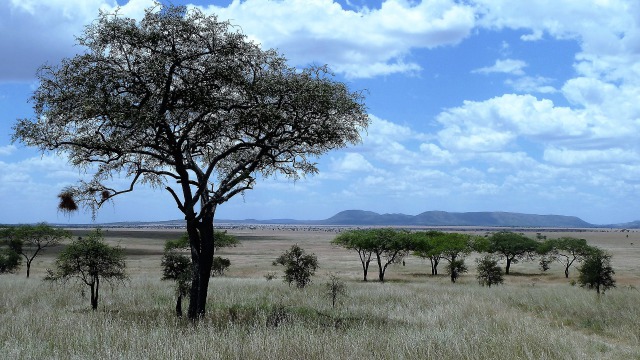
Tanzania har ett flertal världskända platser som lockar människor från när och fjärran. Här hittar du bland annat världens högsta fristående berg – Kilimanjaro. Hit reser såväl vandringssugna personer som vill njuta av fina vyer, men också våghalsar som siktar mot toppen. Landet har också flera välbesökta nationalparker, varav en – Serengeti – kanske är en av de mest kända nationalparkerna i världen. Här kan besökare uppleva ”The big five” och förundras över den underbara miljön djuren lever i.
Den makalösa naturen i Tanzania gör det också till en plats att upptäcka från ovan under en luftballongsfärd. Och för dig som är ute efter en riktig paradisupplevelse i samband med din resa, så är den tillhörande ön Zanzibar ett perfekt ställe att åka till. Här möts du av azurblått hav, utmärkt snorkling och dykning och en avslappnad kultur.
Du bör alltid hålla koll på dina tillhörigheter när du är ute och reser. Tänk också på att sjukvården kan vara begränsad och svåråtkomlig i vissa områden i landet. Vi rekommenderar att du skaffar en reseförsäkring som möter dina behov under din resa till Tanzania.
Översikt
Capital: Dodoma (legislative) (pop. 262,000); Dar Es Salaam (administrative) (pop. 7.776 million)
Population: 70,545,865 (2025 est.)
Other Urban Areas: Mwanza (pop. 1.311 million); Zanzibar (pop. 800,000)
Religions: Christian 63.1%, Muslim 34.1%, folk religion 1.1%, Buddhist <1%, Hindu <1%, Jewish <1%
Languages: Kiswahili or Swahili, Kiunguja, English, Arabic
Time Zone: UTC+3
Driving side: Left
Calling code: +255
Electrical plug(s): Type D and Type G
Pengar
The local currency in Tanzania is Tanzanian shillings (TZS). As of 6 October 2026 100 TZS is equal to 0.04 USD. In addition to the local currency, USD may be accepted for payment in some places.
Currency exchange can be done at airports, banks, exchange offices and hotels.
Travellers should be prepared to use cash to make payments. The economy generally operates on a cash-only basis. Credit cards are accepted in urban areas only. ATMs are available in most places.
Foreign nationals may only withdraw money at bank counters upon presentation of their passports.
Tipping 10% is conventional in restaurants. Hotel and airport porters should be tipped $1-2 (USD) per bag.
El
The power supply in Tanzania is less than reliable. Electricity operates on 230V at 50Hz using plug type(s) D and G.
Pass
Most travellers will need a passport to enter Tanzania. The passport must be valid for at least six months after the date of arrival and have one blank page.
Visum
Visa-free entry is available for certain travellers who qualify based on nationality and purpose of travel. All other travellers will need to obtain a visa from the nearest embassy or consulate or apply online (e-visa) prior to travel.
Entry visa requirements vary based on nationality, purpose of travel and other factors. Individual travellers are responsible for ensuring that they comply with all visa requirements, which should be confirmed with authorities at their destination prior to travel.
Visa Free Travel
Visa-free travel to Tanzania: Foreign nationals from select countries can enter Tanzania visa-free for up to 90 days.
e-Visas
E-visa or Visa on Arrival: Foreign nationals from select countries can apply for a single-entry or multiple-entry e-visa valid for up to 90 days. These nationals may also apply for a visa on arrival. American nationals cannot apply for the single-entry e-visa and must instead apply for the multiple-entry e-visa.
Visas
Entry visa (referral required): Foreign nationals from select countries must apply for a referral visa to receive special clearance in order to enter Tanzania. Authorities do not specify the maximum duration of stay. Those with a special permission from the Commissioner General of Immigration may be allowed to apply for a visa-on-arrival.
Lokal resor
Overview
Vehicular travel across Tanzania is dangerous due to poor road conditions and reckless driving habits. Rail travel and public transport services, including ferries, are similarly inefficient and unsafe. However, air travel is safe and reliable. Taxis are widely available but visitors are advised to only use official cars.
Travel Safety
Air Travel
Dar es Salaam International Airport (DAR/HTDA), also known as Julius Nyerere International Airport, is the country's major airport. Considered to be relatively reliable and efficient, it services both regional and international carriers such as Air Kenya, South African Airways (SAA), EgyptAir, Emirates Airlines, Air India, British Airways and KLM. Kilimanjaro International Airport (JRO/HTKJ) is favoured by visitors venturing to Arusha and the northern safari circuit, while Zanzibar International Airport (ZNZ/HTZA), Mwanza Airport (MWZ/HTMW) and Mtwara Airport (MYW/HTMT) are primarily responsible for internal flights to other regions within the country.
Travel from Dar es Salaam Airport is available via city buses, airport taxis and rental cars. Most foreign nationals visiting Tanzania, however, are advised to prearrange transport through hotel shuttle services.
Air Tanzania, Coastal Aviation and Precision Air run regular services to all main towns. Importantly, domestic flights are subject to delays and cancellations. All national parks have airstrips, and there are several charter companies operating single- and twin-engine aircraft to town and bush airstrips in the country.
All carriers certified by the regulatory oversight authorities of Tanzania are banned from operating flights to Europe, including the United Kingdom, due to a lack of conformity with the necessary technical elements and requirements prescribed by the applicable international safety standards. The airlines include Air Tanzania, As Salaam Air, Fly Zanzibar and Jambo Aviation, among others.
Borders and Entry
Border closures: The border with Burundi is open only at the Kobero-Kabanga and Mugina crossings.
Entry requirements: Travellers entering mainland Tanzania or Zanzibar Island must purchase travel insurance provided or approved by the Tanzanian government. Insurance bought elsewhere will not be valid.
Health-related surveillance measures: Authorities implemented Ebola surveillance measures at the country’s key points of entry until further notice.
Identification
Most travellers will need a passport to enter Tanzania. The passport must be valid for at least six months after the date of arrival and have one blank page.
Travellers with passports where gender is indicated as "neutral" are not allowed entry. The country's laws on LGBTQ people are conservative, and overall social acceptance is low. Lesbian, gay, bisexual, transgender and queer travellers in Tanzania might face legal and social difficulties.
Required Documents
Entry requirement: Mainland Tanzania entry requirement: Officials require inbound foreign nationals to purchase travel insurance from the National Insurance Corporation, a government-owned insurance institution, before departure or upon arrival to be permitted entry into mainland Tanzania. Residents from countries of the East African Community (EAC) and the Southern African Development Community (SADC) are exempt from the requirement. The insurance costs TZS 116,000 (USD 44) and covers medical emergencies, accidents, loss of luggage, and emergency evacuations.
Zanzibar entry requirement: International arrivals entering the island through seaports and airports must hold proof of travel insurance covering the whole duration of the stay (up to 92 days). Zanzibar residents are exempt from this requirement. Visitors can purchase the insurance exclusively through the Zanzibar Insurance Corporation (ZIC) website.
Road Travel
Traffic moves on the left side of the road. The majority of roads are in poor condition, excluding northeast areas of the country, where Dodoma is located. Roads deteriorate due to lack of maintenance and inclement weather, especially during the wet season (late March to mid-June), resulting in many potholes. Driving at night is not recommended as many roads are unlit. Carjacking and other related crimes are common at nighttime; keep your car locked and your valuables out of sight. Drivers often disregard red lights and do not use signals when making a turn. Driving on unpaved roads, such as roads in the Serengeti, requires the use of a 4x4 vehicle. The speed limits in the country are 60 km/h (37 m/h) in urban areas and 80 km/h (49 m/h) on motorways.
Rail Travel
Tanzania Railways Corporation (TRC) provides the principal rail service across Tanzania, including routes to northern Tanzania. TRC runs a daily service from Dar es Salaam to Mwanza near Lake Victoria and Kigoma near Lake Tanganyika. However, the rail service is generally limited, uncomfortable and unreliable.
The Tanzania-Zambia Railway Authority (TAZARA) provide long-distance normal and express (non-stop) trains between Dar es Salaam and Zambia's New Kapiri Mposhi. Commuter trains are also available, covering a distance of 30km (18 miles) between Dar es Salaam and Mwakanga.
Public Transport
Ferries and Boats: The Kigamboni ferry service runs across the mouth of Dar es Salaam harbour, as well as on Lake Victoria. Both, however, have poor maintenance and safety records; and visitors are advised to consider other transport options. Hundreds of people have been killed in ferry accidents in recent years.
Buses: There are several bus services linking major cities, such as Arusha and Dar es Salaam. However, most are often overcrowded and use old and poorly maintained buses and should be avoided as much as possible. Breakdowns are common and cause long delays. Intercity buses are often better maintained and safer.
Minibuses: Although widely available and arguably the most reliable means of transport within Tanzania's cities, mini-buses (dala-dalas), are frequently overcrowded and poorly maintained. Accidents are common.
Vehicle Hire: Rental cars are available from Arusha, Dar es Salaam and Zanzibar. However, due to poor driving conditions, visitors are strongly recommended to hire cars with drivers, especially if travel outside of the larger cities is required.
Taxis: Only use clearly marked taxis and never share them with anyone. Avoid hailing taxis on the street; instead, travellers should only use registered taxis from reputable providers, preferably arranged through their hotel. Taxis are not metered; travellers are advised to negotiate the cost before setting off and should never pay for the journey until they reach the destination.
Online ride-hailing app services, namely Bolt and Paisha, are more recommended than traditional taxis when possible, as they have a fixed fare and are safer.
Landsinformationen på denna webbplats har översatts med hjälp av maskinöversättning av vår partner. Arbete har utförts för att tillhandahålla en så korrekt översättning som möjligt, dock ska du som läsare ha i åtanke och acceptera att ingen automatisk översättning är perfekt och bör inte heller läsas eller tolkas som så. Landsinformationen är inte avsedd att vara en källa till råd eller handling baserat på det material som presenteras. Ingen garanti antyds eller ges, inga anspråk eller rättsliga åtgärder accepteras.

- {{originalfilename}} x
Närmaste servicekontor
Euro-Center Cape Town
Kan jag boka försäkring till landet?
Våra försäkringar gäller inte vid resa till område som Utrikesdepartementet i sina rekommendationer avråder från att besöka eller vistas i. Vänligen se listan UD avråder för mer information.