

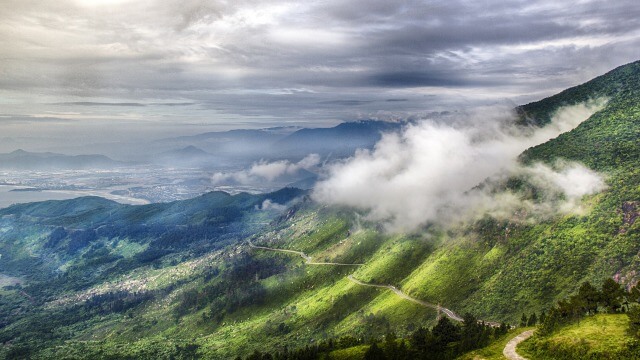
Reseförsäkring Vietnam
Som turist är det viktigt att komma ihåg att man har ett ansvar för sin egen resa och säkerhet. En av de viktigaste åtgärderna man kan ta på egen hand är att se till att man har en giltig reseförsäkring om man skulle bli sjuk eller skada sig.
Fakta om Vietnam som resmål:
- Klimat: Vietnam sträcker sig över flera klimatzoner, från tropiskt i söder till subtropiskt i norr. Med en kustlinje mot Sydkinesiska havet upplever landet både en regnig monsunsäsong och en torrare period, vilket gör det möjligt att besöka året runt. Temperaturen varierar från 20-35 ºC.
- Kulturell mångfald: Med influenser från Kina, Frankrike och en mängd lokala etniciteter är Vietnam ett land som erbjuder rik kulturell mångfald. Detta märks tydligt i dess arkitektur, som sträcker sig från storslagna kejserliga palats i Hue till franska kolonialbyggnader i Hanoi, och i den mångfacetterade vietnamesiska maten.
- Stränder och natur: Vietnam är hem för några av Asiens mest imponerande landskap. Från det klara vattnet och vita sandstränderna i Phu Quoc och Da Nang till de majestätiska bergstopparna i Sapa och de näst intill surrealistiska kalkstensformationerna i Halong Bay.
- Mat och dryck: Vietnamesiska köket är känt för att balansera mellan de fem smakerna sött, surt, salt, beskt, och umami, för att uppnå den perfekta smakupplevelsen. Fräscha örter, ris och delikatesser från havet är dominerande i det vietnamesiska köket. Pho-soppan och den vietnamesiska mackan Banh Mi är måsten för besökare, likaså det intensiva och smakrika vietnamesiska kaffet.
- Sevärdheter och evenemang: Landet är rikt på historiska sevärdheter från det tusenåriga dynastiska styret till krigsmonument som Cu Chi-tunnlarna. Kulturella festivaler som Tet (vietnamesiska nyåret) och månfestivalen uppvisar Vietnams traditioner och gästfrihet.
Vietnamesiska ord och fraser att kunna inför resan:
- Hej: Xin chào [sin chow]
- Hejdå: Tạm biệt [tam byet]
- Tack: Cảm ơn [kam uhn]
- Hur mår du?: Bạn khỏe không? [ban kweh khome?]
- Ja: Vâng [vang]
- Nej: Không [khome]
- Skål: Dô [yo]
Bra att veta! I det vietnamesiska språket har toner en betydande roll i uttalet!
Översikt
Capital: Hanoi (pop. 5.253 million)
Population: 101,598,527 (2025 est.)
Other Urban Areas: Ho Chi Minh City (pop. 9.321 million); Can Tho (pop. 1.865 million); Hai Phong (pop. 1.423 million); Da Nang (pop. 1.221 million); Bien Hoa (pop. 1.111 million)
Religions: Buddhist 7.9%, Catholic 6.6%, Hoa Hao 1.7%, Cao Dai 0.9%, Protestant 0.9%, Muslim 0.1%, none 81.8%
Languages: Vietnamese, English, French, Chinese, Khmer, mountain-area languages (Mon-Khmer and Malayo-Polynesian)
Time Zone: UTC+7
Driving side: Right
Calling code: +84
Electrical plug(s): Type A, Type B and Type C
Pengar
The local currency in Vietnam is Dong (VND). As of 6 October 2026 100 VND is equal to 0.0 USD.
Currency exchange can be done at banks, exchange offices and hotels.
Travellers should be prepared to use credit or debit card payments in urban areas and cash in rural areas. Credit cards are generally accepted in urban areas, however many establishments in rural areas operate on a cash-only basis. Credit cards are accepted in urban areas only. ATMs are only available in urban and/or tourist areas.
Banking hours typically run from 0830 until 1630 Monday to Friday. Travellers are required to declare amounts over $5,000/15,000,000VND/300 grams of gold upon arrival and departure.
Tipping 5-10% of the bill, if a service charge is not added, is polite at restaurants. At the bar, leave loose change or round up the bill. Bellhops expect $1 (USD) per bag for a gratuity. Good housekeeping service deserves $1-2 (USD) per day. Taxis do not expect a tip, but drivers appreciate hearing "keep the change."
El
The power supply in Vietnam is less than reliable. Electricity operates on 220V at 50Hz using plug type(s) A, B and C. Outside of major urban centres such as Ho Chi Minh City and Hanoi, the country is prone to frequent power outages, especially in flood stricken areas. Those travelling with laptops or mobile phone chargers may want to bring along surge protection equipment.
Pass
Most travellers will need a passport to enter Vietnam. The passport must be valid for at least six months after the date of arrival and have two blank pages.
Visum
Visa-free entry is available for certain travellers who qualify based on nationality and purpose of travel. Travellers may qualify for a visa waiver, however this requires the completion of a security check or travel authorisation prior to departure. All other travellers will need to obtain a visa from the nearest embassy or consulate or apply online (e-visa) prior to travel.
Entry visa requirements vary based on nationality, purpose of travel and other factors. Individual travellers are responsible for ensuring that they comply with all visa requirements, which should be confirmed with authorities at their destination prior to travel.
Visa Free Travel
Visa free travel to Vietnam (14 days): Foreign nationals of Brunei and Myanmar may enter Vietnam for the purpose of tourism without a visa for up to 14 days. There are conflicting sources on the permitted stay period for Myanmarese nationals; travellers are advised to consult via the embassy or consular services prior to departure.
Visa free travel to Vietnam (21 days): Foreign nationals of the Philippines may enter Vietnam for the purpose of tourism without a visa for up to 21 days.
Visa free travel to Vietnam (30 days): Foreign nationals of select countries may enter Vietnam for the purpose of tourism without a visa for up to 30 days.
Visa free travel to Vietnam (temporary policy until 14 March 2028): Foreign nationals of select countries may enter Vietnam for tourism without a visa for up to 45 days.
Visa-free travel to Vietnam (temporary policy until 14 August 2028): Foreign nationals of select countries may enter Vietnam for tourism without a visa for up to 45 days.
e-Visas
e-Visa: Foreign nationals of all countries or territories may apply for an e-Visa to enter Vietnam. E-visas are valid for multiple entries and for stays of up to 90 days; holders of e-visas may enter the country through 83 air, land and sea entry ports, including Nội Bài International Airport (HAN/VVNB) serving Hanoi and Tân Sơn Nhất International Airport (SGN/VVTS) serving Ho Chi Minh City.
Lokal resor
Overview
The main international airports in the country are Hanoi's Noi Bai International Airport (HAN/VVNB) in the north and Ho Chi Minh City's Tan Son Nhat International Airport (SGN/VVTS) in the south. Public transport in Vietnam is widely available. Open buses and trains can cover long distances overnight, while in urban centres, the most reliable and safe means of transport are taxis.
Travel Safety
Air Travel
Vietnam's three main international airports are Noi Bai International Airport (HAN/VVNB) located 27 km (17 miles) north-west of Hanoi, Tan Son Nhat International Airport (SGN/VVTS) located eight km (five miles) from Ho Chi Minh City (HCMC) and Da Nang International Airport (DAD/VVDN) located five km (three miles) from Da Nang. Both Hanoi and HCMC have modern airports with two terminals connected by free shuttle buses. The safety record for Vietnamese airports is good. They comply with all standards set by the International Civil Aviation Authority. Vietnam Airlines (VA) is the national carrier and has major hubs at Hanoi and HCMC airports. A wide array of international airlines also serve the airports.
Several transport options are available to reach city centres and airports. Taxis are available at all international airports, and fares are generally fixed and advertised. At some smaller airports, fares are negotiated or metered. Inexpensive local buses to the city centre also depart from the airports. Some airlines offer passengers a free shuttle bus between the airport and their locations in Hanoi and HCMC.
Most major cities in Vietnam are well connected by domestic flights. Other major airports in the country are Hue's Phu Bai International Airport (HUI/VVPB), Phu Quoc's Phu Quoc International Airport (PQC/VVPQ), Cam Ranh's Cam Ranh International Airport (CXR/VVCR), Hai Phong's Cat Bi International Airport (HPH/VVCI) and Vinh's Vinh International Airport (VII/VVVH).
Cà Mau Airport (CAH/VVCM), located in the province of the same name, was closed from 30 October 2025 until 23:59 local time (16:59 GMT) on 31 October, to implement a major expansion and upgrade project.
Bamboo Airways suspended bookings for commercial passenger flights as of 1 August, including both international and domestic routes.
Borders and Entry
Travel Requirements: Foreign nationals must fill out a digital arrival card to enter the country via Ho Chi Minh City’s Tan Son Nhat International Airport (SGN/VVTS), Phu Quoc International Airport (PQC/VVPQ), Da Nang International Airport (DAD/VVDN), Hanoi’s Noi Bai International Airport (HAN/VVNB) and Cam Ranh International Airport (CXR/VVCR).
Health-related surveillance measures: Authorities implemented Ebola screening measures effective until further notice to prevent the entry of the disease.
Identification
Most travellers will need a passport to enter Vietnam. The passport must be valid for at least six months after the date of arrival and have two blank pages.
Travellers with passports where gender is indicated as "neutral" may be denied entry. Contact the nearest embassy, high commission or consulate to confirm if entry is allowed with passports where gender is indicated as "neutral". The country's laws on LGBTQ people are conservative, and overall social acceptance is low. Lesbian, gay, bisexual, transgender and queer travellers in Vietnam might face legal and social difficulties.
Required Documents
Travel (PLF): Authorities require foreign nationals to complete a digital arrival card (Pre-arrival information) before entering the country via Ho Chi Minh City’s Tan Son Nhat International Airport (SGN/VVTS), Phu Quoc International Airport (PQC/VVPQ), Da Nang International Airport (DAD/VVDN), Hanoi’s Noi Bai International Airport (HAN/VVNB) and Cam Ranh International Airport (CXR/VVCR). The card may be submitted within 72 hours before arrival. A QR code will be issued after completing the card, which must be presented to immigration officers on arrival. Document link: https://prearrival.immigration.gov.vn/
Road Travel
Traffic moves on the right in Vietnam. Speed limits are commonly around 30-40kph (18-24mph) on urban roads, 40-60kph (24-37mph) on rural roads and 60-80 (37-49mph) on motorways. It's illegal to drive with a blood alcohol level above zero. Roads are overall overcrowded and driving standards are poor. Vehicle and road maintenance are generally poor. Flooding from June to December can make some roads impassable and prone to landslides. Road accidents are frequent and motorcycles have particularly high accident rates. Foreign visitors are advised not to drive themselves on Vietnamese roads unless they are highly familiar with the conditions.
Rail Travel
International rail services link Hanoi to Nanning, China and Lao Cai to Kunming, China. This service is reliable and safe, with only petty crime as a risk.
Domestically, services can be inefficient and overcrowded. However, many travellers decide to use this means of transport because it is cheap and offers various options, from hard seats to soft beds for overnight journeys. Tickets can be purchased at stations, from the official website of the Vietnam Railways or from third-party providers such as 12Go.Asia and Baolau.
Public Transport
Public transport in Vietnam is widely available. Trains and Open buses connect cities and distant tourist destinations, while taxis and motorbikes are widespread within cities.
Ferries and Boats: Caution should be exercised when using marine transportation in Vietnam. Accidents on ferries are frequent due to overloading and poor maintenance standards. Do not board vessels that appear overloaded or unseaworthy.
Buses: The bus network within cities is safe to use, and fares are cheap. Pickpocketing and other petty crimes can take place at the busiest times when passengers are crammed together.
Open buses operate between all major stops on tourist routes. Most open buses are buses with sleeping or reclining seats. They are generally cheap and reliable, but safety can vary. Poor driving standards and road surfacing lead to frequent accidents. Tickets can be purchased at travel agencies and hotels or via the website vexere.com.
Motorcycle Taxis: Xe om is the most common form of transport for local Vietnamese. It is not recommended for travellers as accidents occur regularly. The fare must be negotiated before getting on the motorbike.
Taxis: Taxis are a safe, inexpensive and comfortable way to travel. They can be found easily in urban areas or can also be hailed by standing on a road or by phoning a taxi company. Some reliable taxi companies are Vinasun, Mai Linh and VinaTaxi. Ride-hailing and taxi apps, such as Grab or Be.
Bicycles: Cyclos are a local mode of transportation generally used by travellers or locals who want to transport bulky cargo. Cyclos are more frequently used for short-distance transport. Passengers riding in cyclos may be especially prone to theft. There have also been instances of some cyclo drivers extorting money from passengers.
Vehicle Hire: Local and international car hire firms have offices in major urban centres and airports. However, it is recommended that foreign nationals do not self-drive vehicles due to road safety and traffic conditions. It should be noted that it is possible to hire vehicles with drivers. An International Driver's Licence is necessary to hire a vehicle.
It is common for visitors to Vietnam to hire motorbikes. There is a very high number of accidents involving foreign nationals with rented motorbikes, and this form of transport is not recommended. Helmets are essential when riding a motorbike in Vietnam.
Metro: Hanoi has two operational metro lines, the Cat Linh – Ha Dong and the Nhon-Hanoi Station line. Timetables, fares and a map can be consulted on this website. Tickets for metros are available in vending machines and ticket offices inside stations. Ho Chi Minh City has one operational metro line, the Suối Tiên – Bến Thành line. A map can be consulted on this website.
Landsinformationen på denna webbplats har översatts med hjälp av maskinöversättning av vår partner. Arbete har utförts för att tillhandahålla en så korrekt översättning som möjligt, dock ska du som läsare ha i åtanke och acceptera att ingen automatisk översättning är perfekt och bör inte heller läsas eller tolkas som så. Landsinformationen är inte avsedd att vara en källa till råd eller handling baserat på det material som presenteras. Ingen garanti antyds eller ges, inga anspråk eller rättsliga åtgärder accepteras.

- {{originalfilename}} x
Närmaste servicekontor
Euro-Center Bangkok
Kan jag boka försäkring till landet?
Våra försäkringar gäller inte vid resa till område som Utrikesdepartementet i sina rekommendationer avråder från att besöka eller vistas i. Vänligen se listan UD avråder för mer information.